
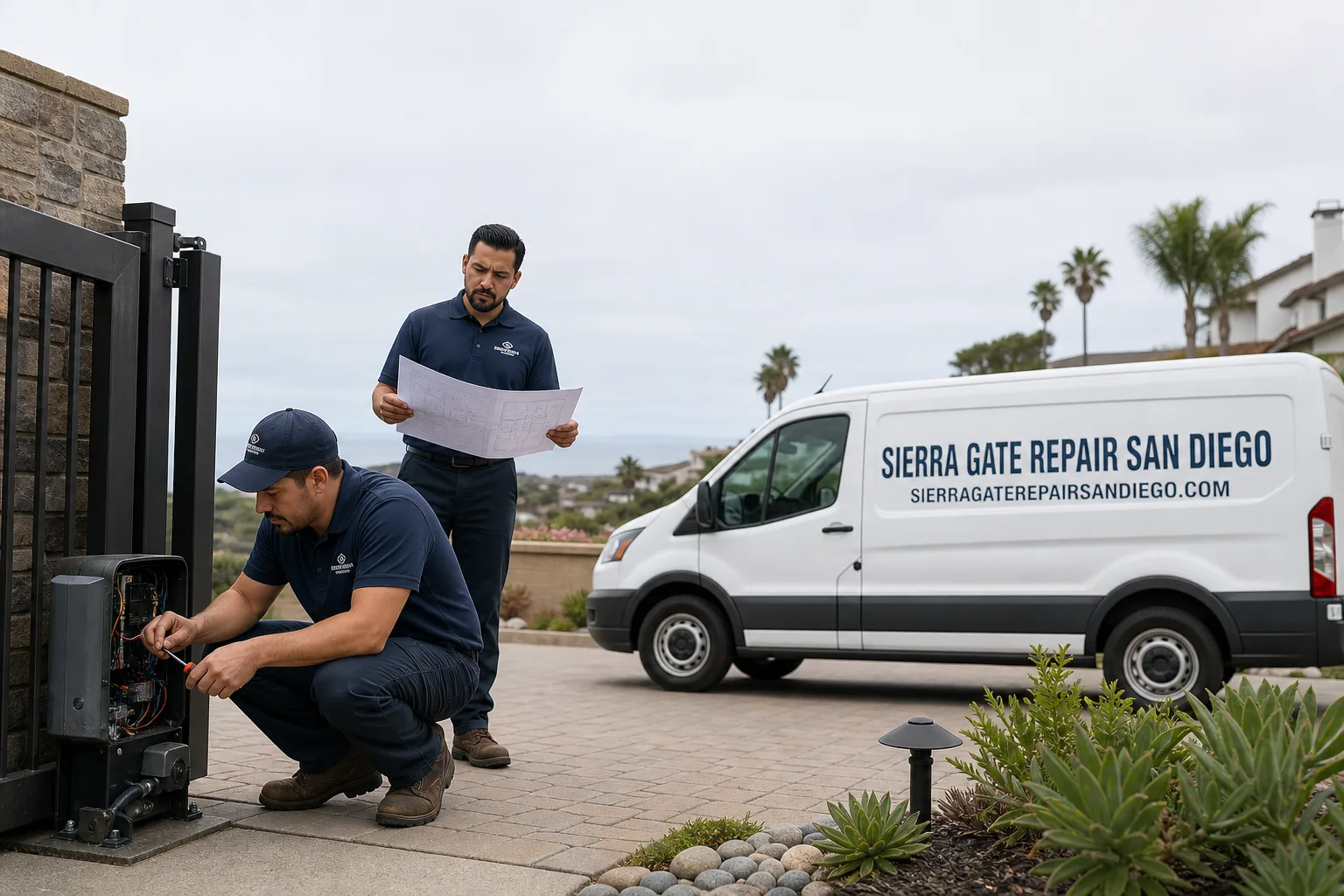
Fast, Reliable Gate Installation Across Stanford
Gate installation in Stanford typically runs $2,800–$8,500 depending on size, material, and access-control integration, with most residential faculty projects completed in 2–4 days after university approval. We handle the vendor credentialing and procurement coordination that Stanford’s unincorporated campus structure requires, so you don’t get stuck mid-project waiting on paperwork.
Frank Delgado and our team have been installing gates for 20 years, and we’ve learned that Stanford jobs aren’t like standard suburban work. The land here is university-owned, the architectural standards are strict, and the gates themselves tend to be heavier-duty: controlled-access entries to research quads, SLAC-adjacent restricted roads, parking structures, and faculty housing enclaves. We know the difference between a quick residential swing gate and a Stanford R&DE-coordinated installation that needs ornamental iron to match sandstone Romanesque Revival detailing. If you’re on Cabrillo Avenue, near Campus Drive, or managing property anywhere in 94305, we’ll get there with the right materials and the right approvals already in motion. Call (855) 671-2951 for a free estimate.
Why Sierra Gate Repair San Diego Is Stanford’s Preferred Gate Installation Company
We’ve earned 375 verified reviews averaging 4.9 stars, and a growing share of that work comes from repeat calls across the Peninsula, including Stanford faculty and property managers who’ve learned that general fence companies don’t understand campus protocols. One recent project had us back three times at different faculty homes after the initial neighbor referral.
Our response time to Stanford is typically same-day or next-day for assessments, though actual installation starts depend on Stanford’s vendor credentialing timeline, which we help expedite by submitting complete material specs and installer certifications upfront. We’ve done enough Stanford jobs to know which R&DE contacts handle which housing zones, and which Facilities liaisons need loop on access-control integrations.
Frank still runs every job site. You get 20 years of gate-specific experience, not a rotating subcontractor figuring out campus protocols on your dime. Our in-house welding and parts fabrication means when we find a bent frame or custom hinge requirement, we solve it on the spot rather than outsourcing and waiting. That matters in Stanford, where a standard catalog gate often won’t meet Campus Architectural Standards.
Our Gate Installation Services in Stanford
Heavy-Duty Sliding Gate Installation
Sliding gates dominate Stanford’s institutional and high-end residential installations, and for good reason. They handle wide openings without the swing radius that eats up limited parking or roadway space near dense campus housing. We install heavy-duty steel slide gates with reinforced V-groove or cantilever systems rated for the constant cycling that Stanford’s access-controlled quads and research parking demand. Our field vignette: we installed a heavy-duty sliding gate at a faculty home on Cabrillo Avenue, replacing a warped wooden frame with a custom steel design. The job required coordinating with Stanford R&DE for material approval and using a LiftMaster pneumatic vehicle detector to bypass debris-prone loop sensors under the oak canopy. That kind of problem-solving only comes from having done Stanford-specific installations before.

Security Gate Installation
Stanford’s security gates aren’t ornamental afterthoughts. They’re integrated into campus-wide access networks, often tied to card readers, proximity fobs, and CCTV systems managed by Stanford IT and Security. We install steel security gates with reinforced frames and tamper-resistant hardware, then coordinate the control-board programming so your new gate talks to existing campus infrastructure. Critical point: swapping out a motor or control board without notifying the right university contact can lock out entire residential or research zones and trigger a security response. We know the notification chain. We’ve worked with FAAC and DoorKing commercial-grade operators that interface cleanly with campus networks, and we don’t touch the control side until Stanford’s IT liaison has cleared the integration path.

Swing Gate Installation
Swing gates suit Stanford’s smaller faculty driveways and pedestrian courtyards where space allows and heritage aesthetics matter. We fabricate and install single and double swing gates in ornamental iron and steel, with hardware selected to match the Romanesque Revival character that Campus Architectural Standards require. Hinges get heavy-duty treatment; Stanford’s winter wet season drives corrosion fast, and a failed hinge on a solid steel gate means a complete realignment or worse. We use sealed-bearing hinges and galvanized or stainless hardware as standard, not upgrades. For automated swing systems, we spec operators with enough torque for the gate weight plus wind load, because the oak canopy creates unpredictable gust patterns that lighter-duty openers can’t handle.

Pedestrian Gate Installation
Faculty housing clusters and graduate residences need pedestrian gates that match the main vehicle entry in material and detail, per R&DE standards. We install matching ornamental iron pedestrian gates with self-closing hinges, magnetic latches, and optional keypad or card-reader prep. These aren’t afterthoughts; they’re the gates faculty and students use daily, and they take more wear than most people expect. We build them to the same structural standard as vehicle gates, with frames that won’t rack or sag as the ground settles.

What happens when you call
- 1
A real person answersNo phone trees — you reach a local pro.
- 2
You get an upfront price rangeHonest numbers before anyone is dispatched.
- 3
A background-checked tech heads outLicensed & insured, dispatched right away.
- 4
You approve before work beginsNothing starts until you say go.
Trusted Brands We Service in Stanford
We work on virtually every major gate brand, including LiftMaster, FAAC, and Elite — no referrals, no guesswork. Our 20 years in gate-specific work means we’ve accumulated deep parts knowledge and supplier relationships that generalist competitors simply don’t have. For Stanford customers, that translates to faster turnaround on operator replacements and access-control integrations that might otherwise wait weeks for specialty components. We stock common LiftMaster control boards and FAAC hydraulic pump assemblies, and our familiarity with Elite’s commercial access systems means we can program or troubleshoot without calling in outside technicians. When a Stanford research quad needs a motor swap that can’t wait for vendor lead times, we usually have the solution in our inventory or can fabricate a compatible workaround on-site.
Common Gate Installation Problems We See in Stanford Homes
- Debris from eucalyptus and oaks jams underground loop sensors and slide-gate tracks. Stanford’s mature canopy drops leaves, bark, and acorns year-round, but summer is worst. Underground inductive loops can’t distinguish between a vehicle and a pile of wet debris, so the gate won’t open or won’t close reliably. We address this with above-ground detection alternatives like pneumatic sensors or microwave detectors, installed with the same sensitivity but none of the maintenance headaches.
- Wooden gate frames shrink and warp in the bone-dry summers, throwing automated systems out of alignment. Stanford sits in a Peninsula rain shadow where summer humidity drops to the teens for months. A wooden gate that measured square in May can rack badly by August, stressing hinges, operators, and latches. We steer Stanford customers toward steel frames with wood cladding if they want the look, or full steel with powder-coated finishes that hold up to both wet winters and desiccating summers.
- Unauthorized control board replacements lock out entire research zones. This isn’t hypothetical. We’ve been called after a non-specialist installer swapped a motor on a SLAC-adjacent gate without looping in Stanford Security, triggering a campus alert and hours of downtime. Our protocol: identify the IT/Security liaison before touching anything networked, document the existing configuration, and test integration before we leave.
- Corrosion from winter wet seasons attacks hinges, latches, and operator housings. November through March brings concentrated moisture that finds every gap in standard hardware. We spec marine-grade or galvanized components for Stanford installations, and we seal operator housings against the specific humidity cycle this microclimate produces.
Pricing for Gate Installation in Stanford, CA
| Gate Type | Typical Range in Stanford | Notes |
|---|---|---|
| Pedestrian gate (manual, steel) | $2,800–$4,200 | Includes ornamental iron matching Campus Architectural Standards |
| Single swing driveway gate (automated) | $4,500–$7,000 | Operator, hardware, basic access control |
| Double swing driveway gate (automated) | $6,500–$9,500 | Heavier operators, dual-arm or underground systems |
| Sliding gate (heavy-duty, automated) | $7,500–$12,000 | Commercial-grade track, debris-resistant detection |
| Security gate with campus integration | $8,500–$15,000+ | Card reader prep, CCTV coordination, IT liaison work |
These ranges reflect Stanford’s specific conditions: university approval timelines, heritage-material requirements, and the heavier-duty construction that campus and faculty-zone installations demand. Material costs run higher than standard suburban jobs because ornamental iron and commercial-grade operators aren’t negotiable here. Site access matters too; working near active research quads or SLAC-adjacent roads requires scheduling coordination that simpler jobs don’t. We provide itemized, upfront quotes after a free on-site assessment, and we don’t start work until you approve every line. Call (855) 671-2951 to schedule — estimates are free, and we’ll flag any university coordination steps your specific project needs.
We Also Serve Cities Near Stanford
Our Gate Installation team works throughout the Peninsula, including Palo Alto, Atherton, East Palo Alto, and Los Altos Hills. Each city has its own building department, architectural review requirements, and climate quirks, and we’ve installed gates in all of them. Palo Alto’s historic districts have their own design guidelines. Atherton’s estate properties demand the same heavy-duty approach we bring to Stanford. East Palo Alto and Los Altos Hills split between urban density and rural acreage, and we size our recommendations accordingly. Wherever you are in 94305 or the surrounding area, the same owner-led crew handles your job.
Serving Stanford, CA — Our Local Coverage Area
We’re based in the Stanford area and know this community well. Use the map below to see our service coverage — if you’re nearby, we can almost certainly help.
FAQs — Gate Installation in Stanford
Yes. Because Stanford is unincorporated university land, all exterior modifications to faculty housing and institutional buildings require R&DE or Facilities approval, and vendors must complete Stanford’s credentialing process before work begins. We handle this paperwork as part of our standard project workflow, submitting material samples, installer certifications, and detailed specs so your installation doesn’t stall waiting on procurement. Call (855) 671-2951 and we’ll walk you through what’s needed for your specific property.
Stanford’s summer humidity regularly drops below 20 percent for months, causing wooden gate frames to lose moisture, shrink, and warp out of square. This throws off automated operators, stresses hinges, and can jam latches. We recommend steel frames with optional wood cladding, or full steel with powder coating, for any automated installation in 94305. The upfront cost is higher, but you avoid the seasonal adjustment cycle that warped wood demands.
Yes, but only with proper coordination through Stanford IT and Security. We install gates with control boards and readers compatible with campus networks, then work directly with your department’s assigned liaison to program integration. We never swap networked components without notification; we’ve seen what happens when an unauthorized replacement locks out a research quad, and we won’t put you in that position. The integration typically adds one business day to the project timeline.
A heavy-duty steel sliding gate with commercial-grade operator and above-ground vehicle detection. SLAC-adjacent roads see mixed traffic, including service vehicles and occasional oversized loads, so swing radius is often limited and reliability is critical. We spec FAAC or LiftMaster commercial operators with battery backup, and we replace debris-prone underground loops with pneumatic or microwave detection that won’t fail when oak debris accumulates. Security integration is standard for these locations.
Eucalyptus bark and leaves are fibrous and oily, packing tightly into slide-gate tracks and creating false triggers on inductive loop sensors. This causes intermittent operation, complete failures, or safety-system shutdowns when the gate can’t confirm clearances. We see this most in summer when dry debris is light enough to blow into mechanisms but brittle enough to jam rather than clear. Our Stanford installations use debris-resistant track designs and above-ground detection as standard, not after-the-fact fixes.
Written by Frank Delgado, Owner at Sierra Gate Repair, serving Stanford and the Peninsula with 20 years of gate-specific experience.