5 Mistakes to Avoid With Gate Motor & Opener
The five costliest gate motor mistakes are all preventable: using petroleum-based lubricants that attract grit, forcing gates open without disengaging the release, installing oversized motors, ignoring post-impact alignment, and cranking force settings to mask mechanical problems. Each one turns a small issue into a motor replacement. If you’d rather have someone who knows what to look for handle it, call us at (855) 671-2951 for a free estimate anywhere in San Diego.
Here’s the thing most people don’t realize — WD-40 is one of the worst things you can put on a gate track. We see the aftermath constantly across San Diego, from La Jolla estates to commercial yards in Kearny Mesa. A homeowner sprays the track to quiet a squeak, and twelve months later the opener’s drive system is grinding itself to death on abrasive paste. The motor didn’t fail. The maintenance did.
Mistake 1: Using WD-40 or General-Purpose Spray Lubricants
Petroleum-based sprays like WD-40 are designed to displace water and penetrate rust. They are not lubricants for moving mechanical systems exposed to outdoor grit. In San Diego’s dry, dusty climate — especially inland areas like Poway and Santee — that thin oil film becomes a magnet for fine particles. Within weeks, your track is coated in abrasive sludge. Within months, that sludge works into the opener’s drive mechanism.
We’ve replaced perfectly good Linear and Viking operators that died prematurely because of this exact issue. The motor strains against increased friction, draws more amperage, overheats, and burns out its windings. All because someone used the wrong can from the garage shelf.
What to use instead:
- Dry PTFE spray for tracks and rollers — leaves a non-stick film that repels dust
- White lithium grease for hinges and pivot points — stays put, doesn’t migrate
- Silicone-based lubricants for weather seals and nylon components
Apply sparingly. More is not better. Wipe excess. In coastal San Diego neighborhoods like Point Loma and Pacific Beach, where salt air adds corrosion risk, proper lubricant choice matters even more — petroleum sprays accelerate galvanic corrosion on aluminum components.
Mistake 2: Forcing the Gate Open Without Disengaging the Release
Power goes out. Gate won’t budge. Someone grabs the gate and pushes or pulls it manually without first operating the manual release mechanism. This is where expensive damage happens fast.
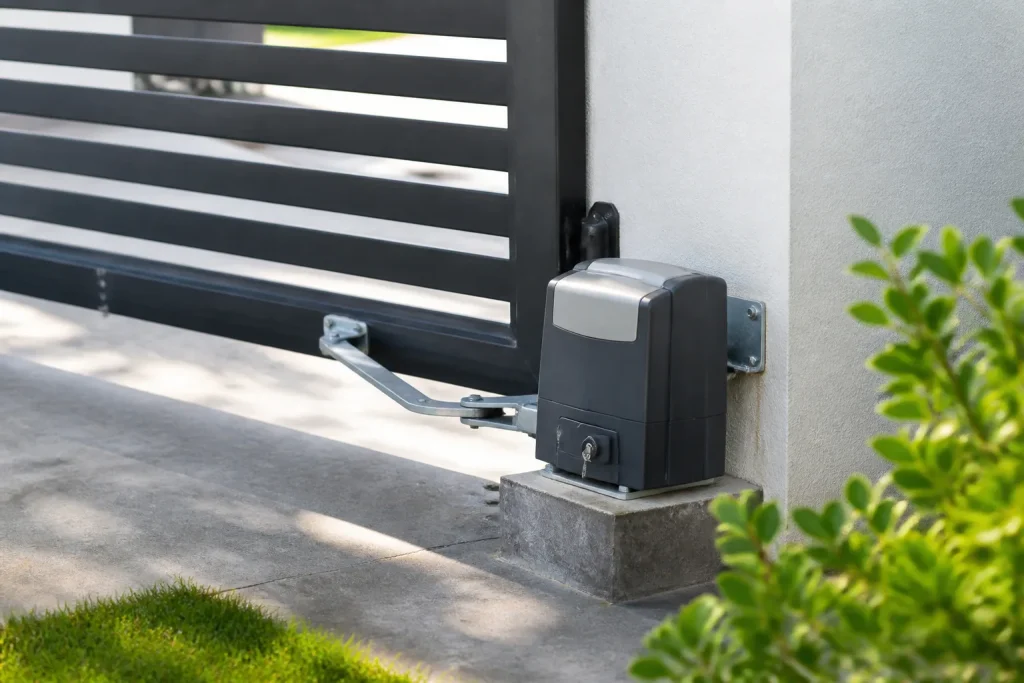
Modern gate operators — especially ball-screw and worm-drive systems like those in DoorKing commercial units — are not designed for manual force against engaged gearing. Forcing movement strips the ball nut, shears the worm shaft, or cracks the gearbox housing. We’ve seen $2,400 operators rendered junk because someone skipped a thirty-second release step during a five-minute outage.
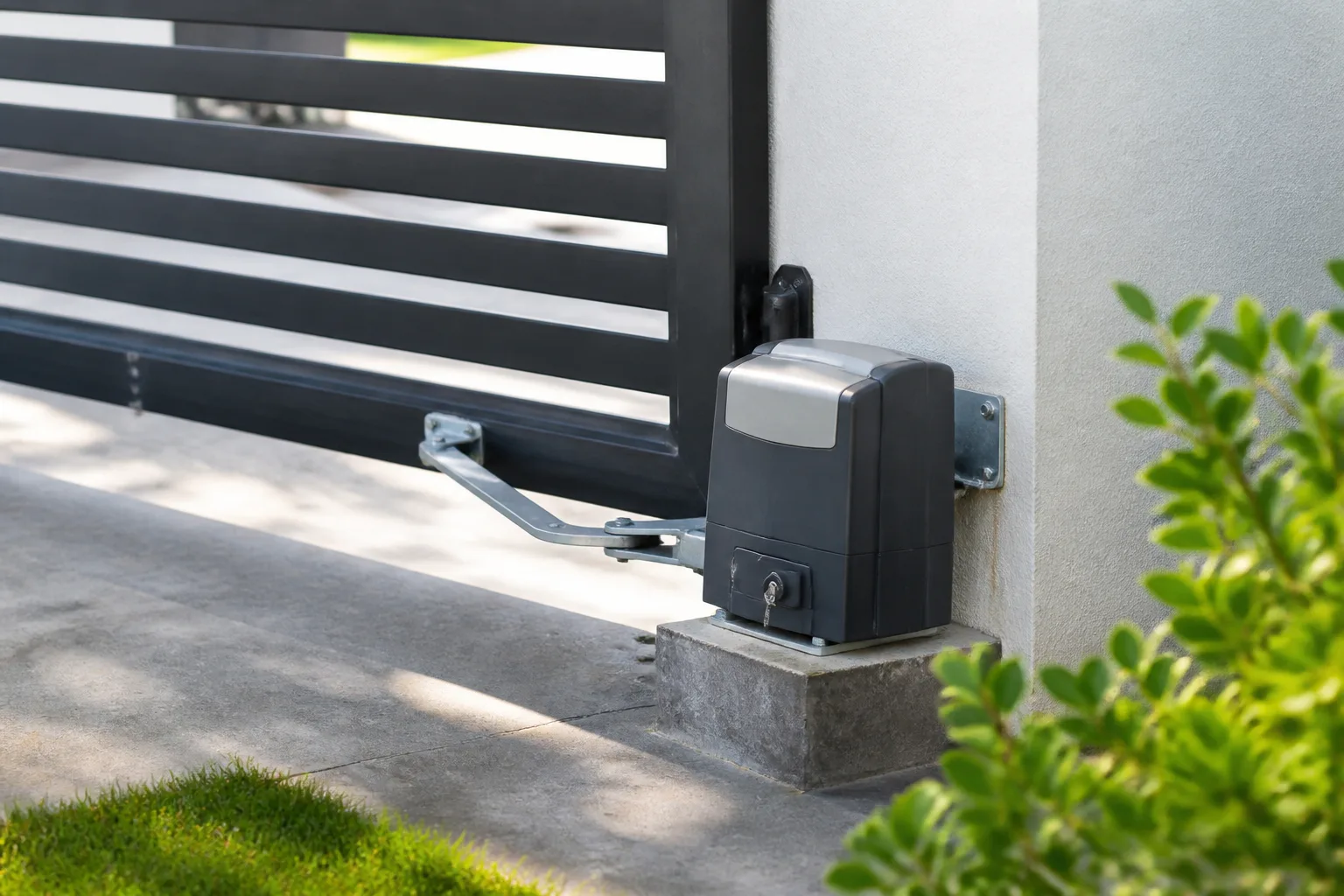
Every automatic gate has a manual release. Usually a key-operated lever or pull-cord disengages the motor from the drive train. Find yours before you need it. Test it annually. In our experience across San Diego, the release mechanism itself often seizes from neglect — another reason to include it in routine maintenance.
After a power outage, always re-engage the operator properly. Half-engaged clutches cause intermittent operation, false “obstruction” errors, and eventual motor damage. If the gate feels different after manual operation, something’s wrong. Don’t keep running it.
When to call a pro: If the release won’t operate smoothly, if the gate binds during manual movement, or if the operator makes grinding noises upon restoration — these indicate mechanical problems that forced opening will worsen.
Mistake 3: Installing an Oversized Motor
Bigger seems better. It isn’t. Installing a motor with higher torque than your gate requires creates cascading problems that show up months or years later.
An overpowered operator doesn’t “work less hard.” It applies excessive force during acceleration and deceleration. Hinges take the brunt — we’ve replaced hinge sets in Rancho Bernardo that were literally pulling out of masonry columns because the motor’s starting torque exceeded the hardware’s anchoring capacity. Concrete anchors fail gradually, then suddenly. The gate sags. The motor strains against misalignment. Everything degrades together.
Proper motor sizing considers gate weight, length, wind load, and duty cycle. A solid 16-foot wrought-iron driveway gate in a wind-exposed San Diego canyon needs different specification than the same gate in a sheltered courtyard. Ghost Controls and Mighty Mule residential systems are particularly sensitive to oversizing — their control boards interpret excess current draw as obstruction, leading to erratic operation and premature board failure.
We size operators based on measured gate parameters, not guesswork. The right motor runs cooler, lasts longer, and doesn’t destroy everything it’s attached to.
Mistake 4: Ignoring Alignment After Any Impact
Even a minor clip matters. A delivery truck brushing the gate. A teenager learning to drive in Scripps Ranch. The landscaping trailer that “just tapped it.” These impacts rack the gate frame slightly out of square. The motor keeps running. And running. And running against misalignment until it dies.
We’ve diagnosed motors “failed from old age” that were actually killed in weeks by post-impact misalignment. The operator works harder to start and stop. Limit switches drift. Safety edges trigger falsely. The control board logs phantom obstruction faults. Homeowners compensate by adjusting force settings upward — which brings us to mistake five.
After any contact with the gate:
- Visually inspect the frame for twist or rack
- Check hinge points for shifted or cracked welds
- Verify the gate moves freely by hand with the operator disengaged
- Confirm limit switch positions still match actual gate travel
We carry welding equipment and alignment tools for exactly this. Gate repair in San Diego often starts with impact damage that went unaddressed.
Mistake 5: Cranking Force Settings to “Fix” a Slow Gate
This is the most dangerous mistake on the list. A gate starts moving sluggishly. Instead of diagnosing why, someone opens the control box and cranks the force or sensitivity potentiometer to maximum. The gate speeds up. Problem solved — until someone gets hurt.
Gate operators are classified as machines with recognized entrapment hazard. The safety reversal system depends on calibrated force sensing. When you defeat that calibration to overcome mechanical resistance, the gate becomes a blunt instrument. It won’t stop for a child, a pet, or a vehicle bumper. Liability exposure is severe, and in commercial settings, code compliance violations can void insurance coverage.
In San Diego, we’ve seen this after well-meaning property managers “adjusted” operators following tenant complaints about slow operation. The real causes were predictable: dry rollers, bent track, failing hinge bearings, or debris accumulation. All fixable. All cheaper than an injury claim.
The force setting is a diagnostic tool, not a volume knob. If your gate needs more force to operate, it’s telling you something is mechanically wrong. Listen to it.
Related services in San Diego: If your gate motor is showing symptoms — slow operation, false obstruction errors, or unusual noise — gate motor and opener service in San Diego from Sierra Gate Repair includes full diagnostic, mechanical inspection, and proper control calibration.
The Bottom Line
Gate motors are more durable than people assume. Most premature failures trace back to these five avoidable mistakes: wrong lubricant, forced manual operation, oversized installation, ignored impact damage, and defeated safety settings. The motor was doing its job until human decisions overloaded it.
Regular maintenance — proper lubrication, annual release mechanism testing, post-impact inspection, and professional calibration — extends operator life significantly. We’ve serviced twenty-year-old DoorKing and FAAC systems that still run smoothly because they were maintained correctly. We’ve replaced three-year-old units that were destroyed by WD-40 and force-setting adjustments.
If you’re in San Diego and your gate isn’t operating right, don’t compensate with workarounds that create bigger problems. Sierra Gate Repair San Diego offers free estimates — call (855) 671-2951. Frank still runs the diagnostic calls himself, and we’ll tell you honestly whether you need a repair, an adjustment, or just better maintenance habits.
Frequently Asked Questions
Twice yearly is sufficient for most San Diego properties — once before the dry Santa Ana season and once after winter rains. Coastal properties may need quarterly attention due to salt air corrosion risk. Use dry PTFE or white lithium grease only; never petroleum-based sprays. Call (855) 671-2951 if you’re unsure what your system needs.
No. Motor speed is controlled by the operator’s drive ratio and control board programming, not raw power. A higher-torque motor applied to an improperly specified gate will damage hinges, anchors, and the gate frame itself. Proper sizing considers weight, wind load, and cycle frequency — not just “more power.” We evaluate these parameters during every gate installation in San Diego.
Thermal expansion changes mechanical tolerances, and increased resistance from dry, contracted lubricants is common. In San Diego’s inland valleys, we’ve seen this pattern repeatedly — the gate isn’t failing, but marginal mechanical issues become critical as components expand and friction increases. It’s a warning sign that maintenance is overdue.
Depends on the failure mode and parts availability. We stock components for nine major brands including Linear, Viking, and Ghost Controls, and our supplier relationships often source discontinued parts faster than competitors. If the motor itself is sound but the control board or drive assembly failed, repair is usually cost-effective. If the unit has been damaged by force-setting abuse or years of misalignment, replacement with proper specification is the better investment. Call (855) 671-2951 for an honest assessment — estimates are free.
Written by Frank Delgado, Founder & Lead Installer at Sierra Gate Repair San Diego, serving San Diego since 2006.
Need Gate Repair Help?
Call Sierra Gate Repair San Diego — licensed & insured, here with fast after-hours help in San Diego.
(855) 671-2951